An Explosion in Language Development
Nearly 120 years ago, when Dr. Maria Montessori established the first Casa dei Bambini (Children’s House) in Rome, she observed an extraordinary phenomenon. The young children, then considered far too young for formal academics, developed a profound pride in their work and eagerly sought to read and write.
When parents and children asked to learn, Dr. Montessori did what she did best: she observed their natural development, isolated the precise underlying skills required, and prepared an environment to support them. The result was what she famously described as an "explosion into writing and reading."
In our Primary Montessori environments, language development unfolds naturally across three interconnected phases: spoken language, written expression, and interpretive reading.
Spoken Language: The Vital Foundation
Spoken language is the bedrock of all literacy. In the classroom, we offer rich, precise, and varied vocabulary through real-world experiences, stories, and structured conversation.
- Vocabulary Enrichment: Specific, clear nomenclature expands a child's receptive and expressive vocabulary.
- Active Listening & Comprehension: Language games refine auditory tracking and comprehension skills.
- Valuing the Child’s Voice: By listening intentionally to each child’s spontaneous expressions, we build their confidence and reinforce that their thoughts are meaningful.
Written Expression: Separating Mind and Hand
In the Montessori framework, writing consists of two distinct components: composing (the mental work of creating a thought) and recording (the physical mechanics of writing). We prepare these two processes independently so physical limitations never block intellectual expression.
- Preparing the Mind: Writing is the process of translating known thoughts into symbols. Because a child’s mind develops faster than the fine motor control in their hand, we introduce the Movable Alphabet. This material allows children to compose words, stories, and poems by placing wooden letters on a mat long before they can comfortably hold a pencil.
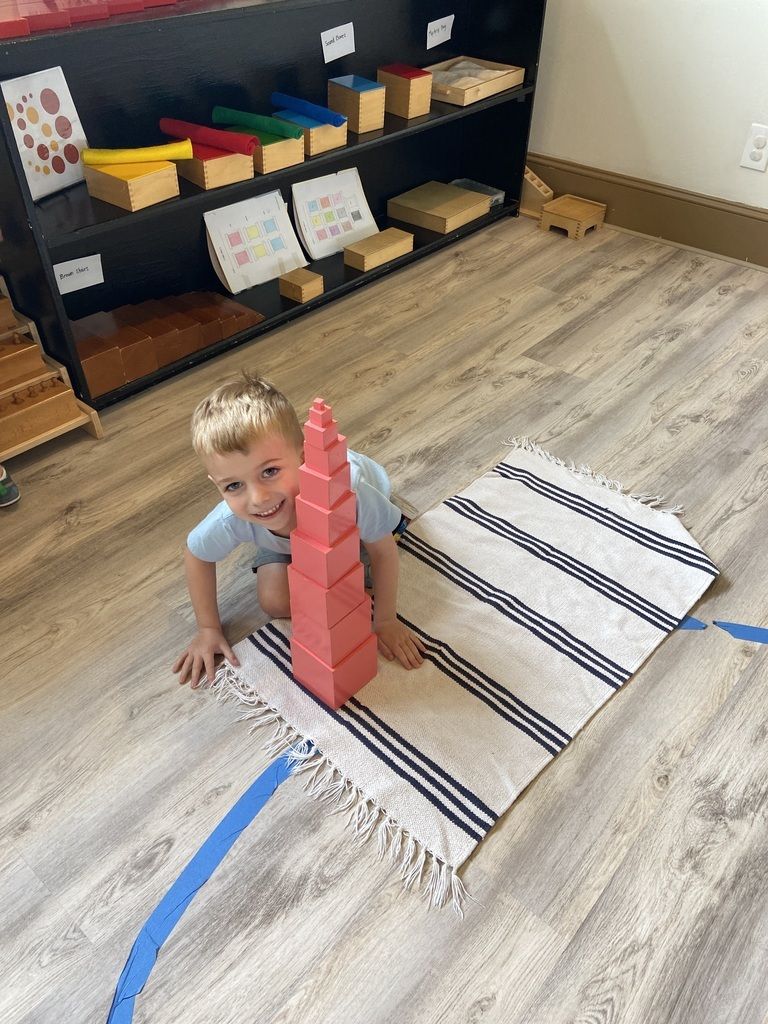
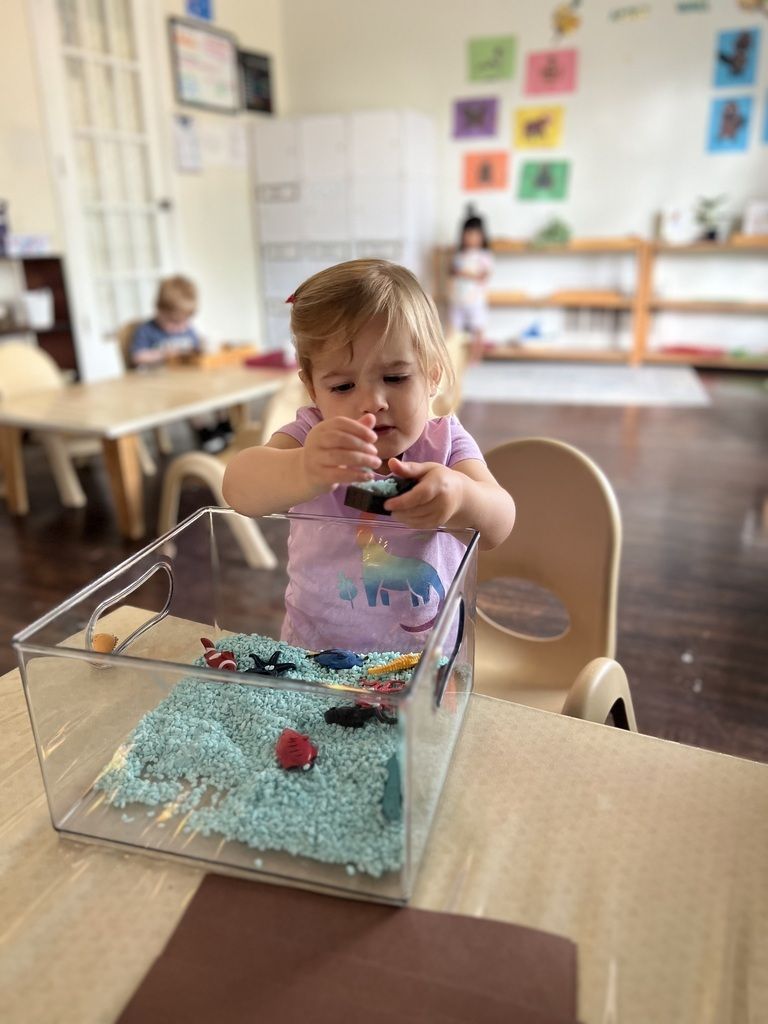
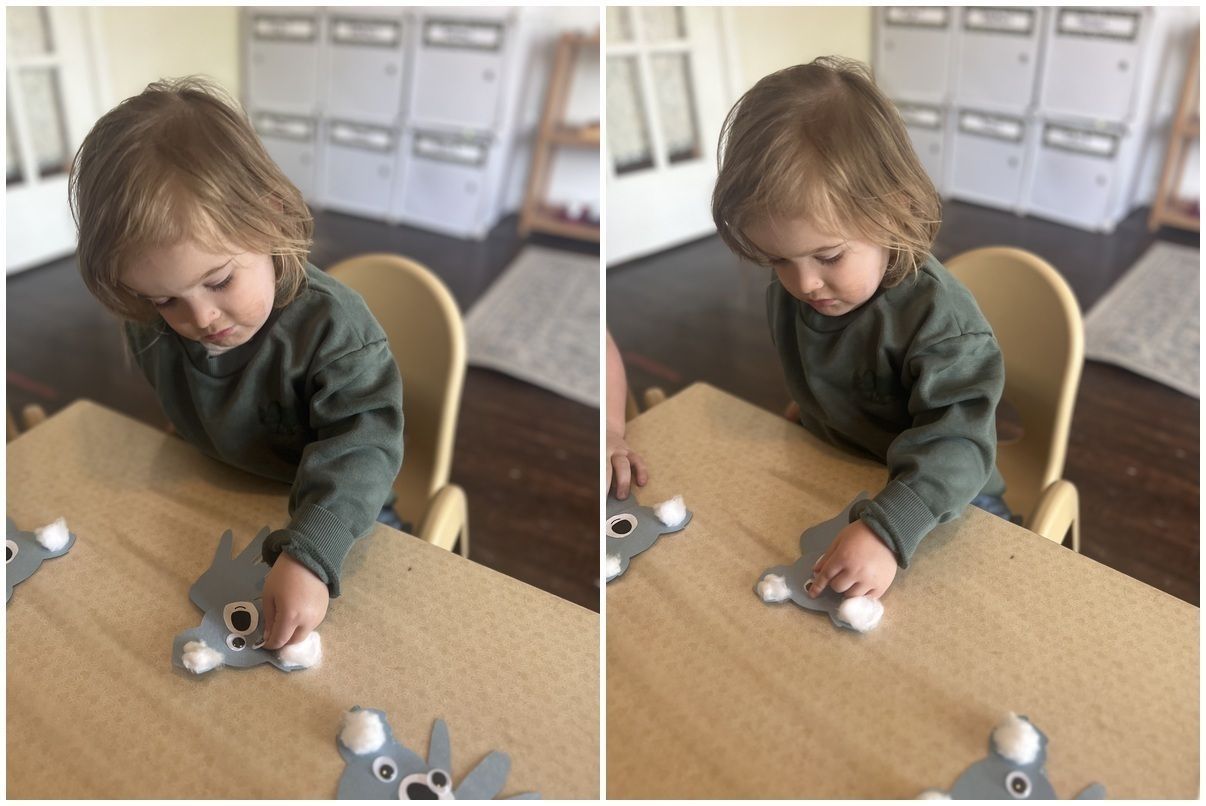
- Preparing the Hand: Pincer-grasp activities—such as using knobbed cylinder blocks, tracing metal insets, and handling sensory materials—build the exact muscle strength and lightness of touch needed for pencil control.
Interpretive Reading: From Symbol to Meaning
Unlike traditional education models, Montessori introduces writing before reading. Writing is an expression of one's own known thoughts. Reading, by contrast, is far more complex: the child must decode unknown symbols, match sounds, blend them, and interpret the author's hidden meaning.
To prepare the eye for reading, activities throughout the classroom reinforce a left-to-right, top-to-bottom orientation—from scrubbing a table to dusting a shelf. Sandpaper Letters engage three senses simultaneously (tactile, visual, and auditory), connecting the sound of a phoneme directly to its physical shape.
As children transition from reading single words to phrases and sentences, grammar materials visually highlight the function of words and sentence structure, giving them the structural key to fully comprehend written thought.
Paralleling Human History
This natural sequence—from spoken word, to written symbol, to interpretive reading—mirrors the history of human civilization. Humanity spoke long before creating cave paintings and written scripts, and only later developed reading to interpret the recorded thoughts of others. Young children naturally repeat this evolutionary arc between birth and age six.
By breaking complex capabilities into accessible, isolated steps, the Montessori environment allows children to master each skill joyfully and without pressure. When these skills come together, the resulting "explosion" into reading and writing feels effortless to the child.
See this in action.
Schedule a tour today!