“When children come into contact with nature, they reveal their strength.” — Dr. Maria Montessori
July 13, 2026

We all know instinctively that spending time outdoors is beneficial for our children. But what did Maria Montessori actually say about our relationship with the earth? What can we do as parents to support our children’s development in the natural world, and how can we weave these critical experiences into our daily lives?


Beyond the Window Sill: Moving Past Distant Nature


What often comes to mind when we think of introducing young children to nature? Perhaps a small collection of shells on a windowsill, planting a few flowers in the spring, or pushing a toddler in a stroller through a park. While these activities are beautiful and enriching in their own way, they can sometimes fall short of giving children truly authentic, immersive experiences.


As adults, many of us have developed habits that keep our interactions with the natural world at a comfortable distance. We prefer not to be stuck out in the rain, the wind, or the heat. We have learned to shelter ourselves away from the elements to remain safe and dry.


Often, we developed this perspective during our own childhoods, at the urging of well-meaning adults who didn’t want us to jump in muddy puddles or ruin our clothing. Part of our work as parents and educators is to step back and gently reevaluate our own relationship with the outdoors.

  • Context matters: A collection of shells is lovely, but it holds profound internal context for a child who has actually felt the sand between their toes and gathered those shells from the shore.
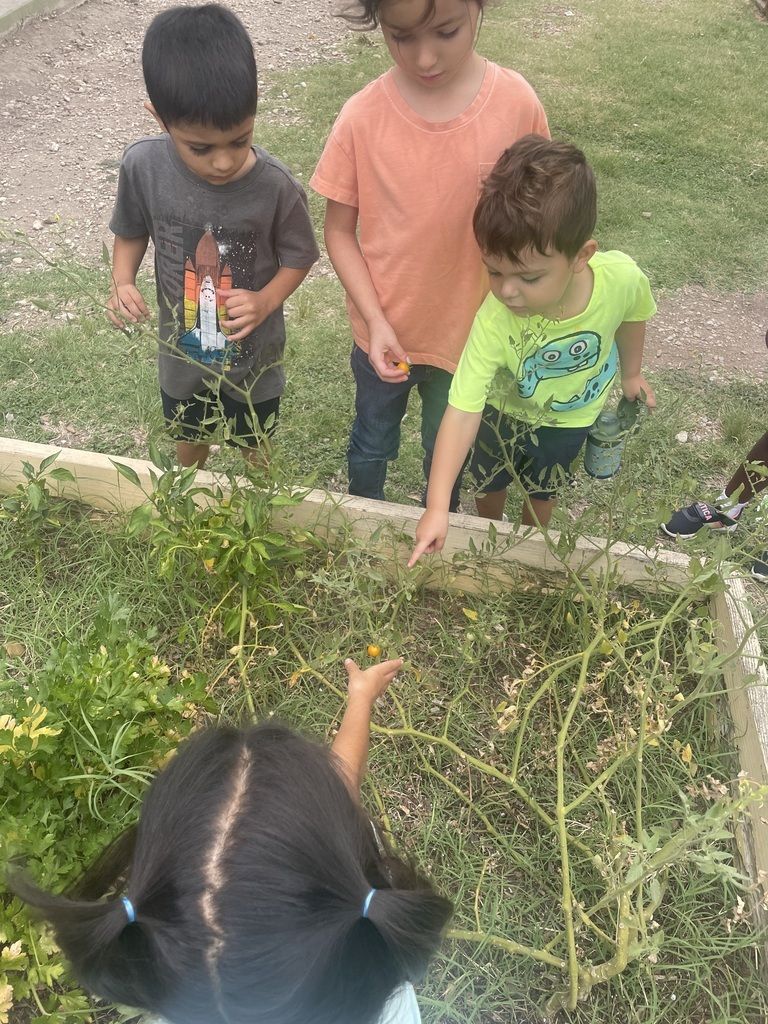
  • Interactive growth: We may love looking at pristine flower beds, but children react most strongly to plants they can interact with—like a sensory garden, a small vegetable patch, or even a single tomato plant in a pot that they are responsible for watering.
  • Slowing down: Taking a stroll in the park is wonderful, but let us offer children the freedom to move under their own power and at their own pace. When we step back, they can stop to notice the intricate details we so quickly walk right past.
"Only poets and little children can feel the fascination of a tiny rivulet of water flowing over pebbles." — Dr. Maria Montessori

Have you ever had a moment—perhaps by a lake, in the woods, or looking out at an open field—when an intense, almost indescribable feeling of peace settled over you? You felt deeply connected to the earth, alive and grounded all at once. Children have the capacity to feel this connection even more deeply than we do. The world is still entirely fresh and new to them, and these early natural experiences leave a permanent blueprint on their souls.


When we take children out into nature, it is easy for our adult minds to focus on the destination or the exercise.


Children, fortunately, live entirely in the present moment. A caterpillar crawling across a path calls to their intense desire to observe. A fragment of a fallen leaf is a tiny window into a ecosystem they are still discovering. Their sense of wonder has much to teach us, if only we can remember to slow down and follow their lead.


A Burgeoning Movement Toward Connection


While a baseline appreciation for nature has always existed, modern life has undeniable elements of disconnect. In recent years, however, there has been a beautiful shift as more families seek ways to rebuild those vital roots—whether through visiting local farmers' markets, tending backyard gardens, or exploring state and national parks.

We know deep down when something is missing, and we look for ways to find our way back to the earth.


Could it be that our children have the ability to both inspire us and show us the way? If we allow them to slow down and notice the little things—the insects, the texture of moss, the way sunlight catches a shiny rock—we might just learn to rediscover those wonders ourselves.


Bringing Nature into Daily Life


Dr. Montessori suggested that it is not just the isolated act of visiting a garden that leaves an impression upon a child, but the entire approach of living naturally. From the concept of Japanese forest bathing to the Norwegian tradition of friluftsliv (open-air living), cultures around the world have long recognized that a connection to nature is essential to our well-being. Modern science continuously echoes this, reaffirming that time spent outdoors reduces stress and fosters healthy development.


At Montessori Oaks, we integrate natural living into our daily rhythms:

  • The Prepared Environment: We bring the natural world indoors through live plants and elements that the children help care for.
  • Honoring Natural Materials: Our classroom materials are intentionally crafted from wood, metal, glass, and cotton rather than synthetic plastics, offering rich tactile feedback.
  • Outdoor Harmony: We view our outdoor spaces as an extension of the classroom, allowing children to interact with the environment in tangible, purposeful ways.


Practical Tips for Families


As parents, the simplest way to help our children live more naturally is to lead by example. We can find small ways to enjoy the outdoors together on a regular basis, through every changing season.

  • Explore locally: Take time to seek out the local parks, trails, nature preserves, and green spaces right in our neighborhood.
  • Follow their pace: Instead of hiking for distance, try a "micro-hike" where the goal is simply to see what can be discovered within a single square yard of trail side.
  • Embrace the elements: With the right gear, rainy days become a sensory wonderland of puddles and streams.


If you are looking for new trails or local green spaces to explore this weekend, AllTrails is a wonderful resource to help you find family-friendly paths nearby.


Enjoy the fresh air, follow your child's wonder, and please let us know all about your outdoor adventures the next time we chat!
By Montessori Oaks July 15, 2026
5 Signs Your Toddler Is Ready for Montessori As parents, we all want to give our children the strongest possible foundation. The toddler years are an incredible period of growth—a time when children begin to discover their independence, express curiosity, and develop the skills that shape how they learn. Many parents wonder, "Is my toddler ready for Montessori?" The answer may surprise you. Montessori education was designed specifically to support young children during these important developmental years. Here are five signs your toddler may be ready to begin their Montessori journey. --- 1. Your Toddler Wants to Do Things Independently Have you heard phrases like: "I do it!" "Let me try!" "I can do it myself!" While these moments can sometimes require extra patience from parents, they are actually signs of incredible growth. Dr. Maria Montessori recognized that children have a natural desire to become independent. Montessori classrooms are designed to encourage this independence in healthy ways. Through practical life activities like pouring water, preparing snacks, cleaning, dressing, and caring for their environment, toddlers learn: ✓ Confidence ✓ Responsibility ✓ Problem-solving skills ✓ Self-control Every small accomplishment teaches children an important message: I am capable. --- 2. Your Toddler Is Curious About Everything Toddlers are natural scientists. They want to touch, explore, test, and understand the world around them. Questions, discoveries, and exploration are signs that your child's mind is actively growing. Montessori takes this natural curiosity and nurtures it through hands-on learning experiences. Instead of simply telling children how something works, Montessori allows them to discover through activities involving: Nature exploration Early math materials Art and creativity Science and sensory experiences When children enjoy the process of discovery, they develop something more valuable than memorized information—a lifelong love of learning. --- 3. Your Toddler Enjoys Hands-On Activities Young children learn best by doing. Before children can understand abstract concepts like numbers and letters, they need opportunities to see, touch, and experience learning. Montessori materials are designed to teach through movement and exploration. For example: - Building with blocks strengthens spatial awareness. - Sorting activities develop early math skills. - Pouring and transferring activities improve coordination. - Sandpaper letters prepare children for reading and writing. To adults, it may look like play. To children, it isd exploring brain development happening right before our eyes. --- 4. Your Toddler Is Learning to Focus Many parents are surprised by how deeply toddlers can concentrate when given the right environment. A Montessori classroom is intentionally designed to be calm, organized, and inviting. Children are given time to choose meaningful activities and work without unnecessary interruptions. Over time, children strengthen their ability to: ✓ Focus longer ✓ Complete tasks ✓ Be patient ✓ Overcome challenges These skills become the foundation for future academic success. --- 5. Your Toddler Is Ready for Social Growth The toddler years are when children begin learning how to interact with others, communicate feelings, and become part of a community. Montessori classrooms help children practice: - Sharing space respectfully - Using kind words - Helping classmates - Developing empathy Children are not just learning academics—they are learning how to become thoughtful, confident, and compassionate individuals. --- Is Montessori the Right Next Step for Your Toddler? If your toddler is showing independence, curiosity, a desire to explore, or excitement about learning, they may be ready to thrive in a Montessori environment. At Montessori Oaks, we believe every child is like a little acorn—filled with unlimited potential. With the right environment, patience, and guidance, they can grow into confident learners prepared for the future. The best way to understand Montessori is to experience it. See our classrooms in action. Schedule a tour at Montessori Oaks today and discover how your child's journey can begin.
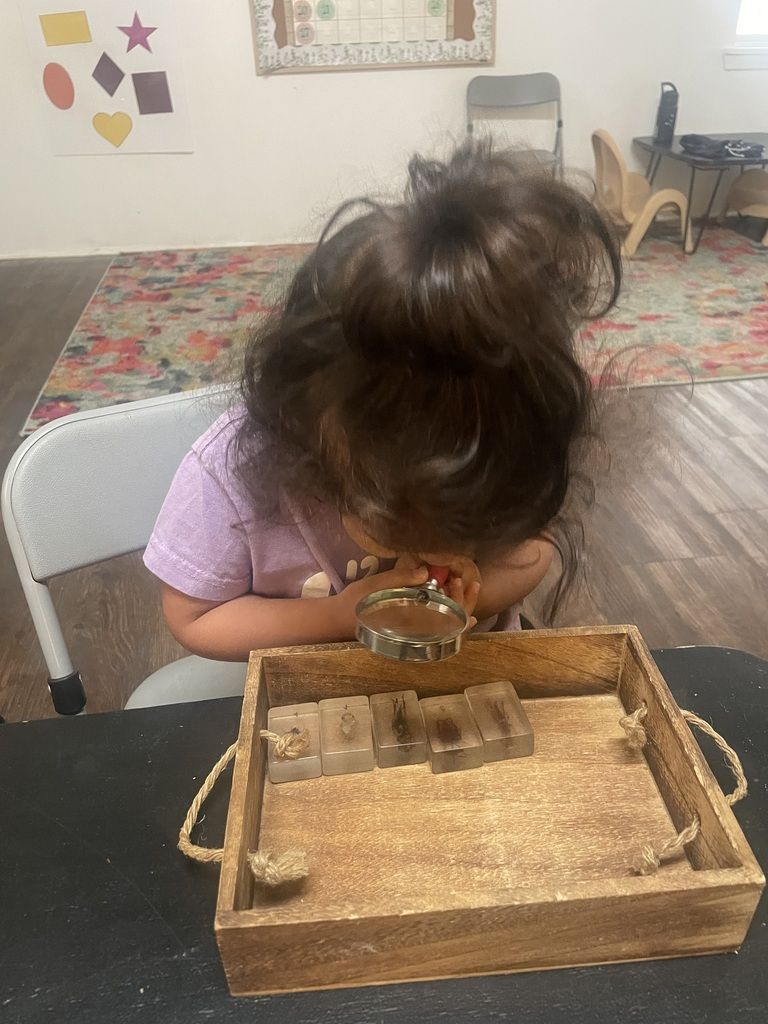
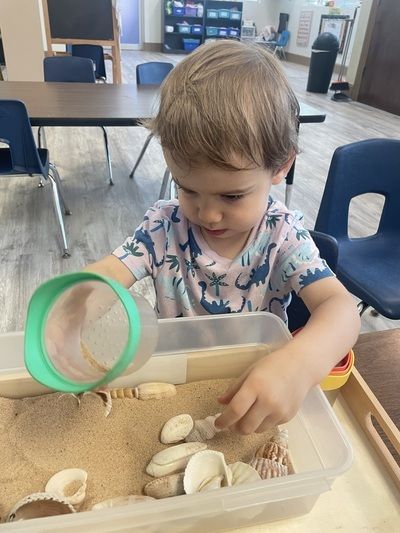
Child at a tray table, lowering a clear magnifying glass over small objects.
July 6, 2026
Discover how Montessori Oaks nurtures independence, joyful learning, and community through a child-centered approach that honors your child's unique pace.
By Montessori Oaks June 17, 2026
The Unique Benefits of Montessori Education for Young Learners Choosing the right preschool is one of the most important decisions a parent can make. The early years of a child's life lay the foundation for future academic success, confidence, and emotional well-being. While many preschool programs focus primarily on preparing children for kindergarten, Montessori education goes a step further—it prepares children for life. At Montessori Oaks, we believe children learn best when they are given the freedom to explore, discover, and develop at their own pace in a nurturing environment. Montessori Fosters Independence One of the most celebrated benefits of Montessori education is its focus on independence. From a young age, children are encouraged to make choices, solve problems, and take responsibility for their daily activities. Whether they are pouring water, preparing a snack, choosing their work, or caring for classroom materials, children develop confidence by learning, "I can do it myself." These small moments of independence add up over time, creating children who are capable, self-motivated, and confident in their abilities.  Montessori Develops Critical Thinking Skills In a Montessori classroom, children are not simply told the answers. Instead, they are encouraged to explore, experiment, and discover solutions on their own. Hands-on Montessori materials allow children to understand concepts through experience rather than memorization. They learn to ask questions, analyze information, and think critically about the world around them. These skills help children become lifelong learners who are curious, creative, and adaptable. Children Learn at Their Own Pace Every child develops differently. Some children are ready for reading at age four, while others need more time. Some excel in math, while others are fascinated by science, art, or language. Montessori education recognizes these differences and allows children to progress according to their individual readiness. Rather than feeling pressured to keep up with a group, children experience the joy of mastering skills when they are developmentally ready. This creates a positive relationship with learning that can last a lifetime. A Calm Environment Supports Learning Montessori classrooms are intentionally designed to be peaceful, organized, and engaging. Children are free to move, choose meaningful work, and focus without unnecessary distractions. This calm atmosphere helps children develop concentration, patience, and self-discipline. When children can focus deeply, they retain information more effectively and develop a stronger love for learning. Preparing Children for More Than Kindergarten Parents often ask if Montessori prepares children for kindergarten. The answer is yes—but Montessori also prepares children for much more. Montessori students develop: Independence Problem-solving skills Focus and concentration Communication skills Confidence Leadership abilities A love for learning These qualities benefit children not only in elementary school but throughout their entire lives. Experience the Montessori Difference The best way to understand Montessori education is to see it in action. At Montessori Oaks, our classrooms are filled with curious minds, hands-on learning experiences, and children who are excited to learn each day. We are committed to helping every child build a strong foundation for future success while nurturing their natural curiosity and love of learning. We invite you to visit Montessori Oaks and experience the difference for yourself. Schedule a Tour Today Come see how Montessori Oaks helps children become confident, independent, and lifelong learners. We would love to meet your family and show you why so many parents choose Montessori Oaks for their child's early education journey.
By Montessori Oaks May 5, 2026
Why Part-Time Montessori May Be the Best Decision You Make for Your Child Today’s parents are asking an important question: Is more technology in the classroom actually helping children learn? According to neuroscientist Dr. Jared Cooney Horvath , the answer may be no. His research highlights a concerning trend—many children today are struggling with focus, literacy, and deep learning , largely due to increased screen exposure and reduced hands-on engagement. This is why more families are turning to part-time Montessori programs as a powerful solution. The Problem: Too Much Screen Time, Not Enough Real Learning Dr. Horvath explains that children learn best through human interaction, repetition, and hands-on experiences—not passive screen consumption. In many traditional classrooms, children are: Switching tasks frequently Engaging with screens instead of materials Losing the ability to focus deeply Over time, this can impact attention span, comprehension, and confidence . The Solution: Part-Time Montessori A part-time Montessori program offers the perfect balance for modern families. Even just a few days per week in a Montessori environment can: Rebuild focus and attention span. Strengthen reading and language skills. Encourage independent thinking Reduce reliance on screens. Montessori classrooms are intentionally designed to be calm, hands-on, and distraction-free —exactly the kind of environment Dr. Horvath suggests children need. Why Part-Time Montessori Works Many parents assume children need full-time enrollment to benefit—but that’s not true. Part-time Montessori is highly effective because: Children engage in deep, uninterrupted work cycles. Learning is meaningful and memorable. Skills developed carry over into the home and other environments. Even limited exposure creates lasting improvements in how children: Approach learning Solve problems Stay focused A Smarter Start for Modern Kids In a world filled with distractions, giving your child time in a screen-free, hands-on learning environment is no longer a luxury—it’s essential. A part-time Montessori program provides: The benefits of structured learning The freedom of child-led exploration The brain development support children truly need Final Thought Dr. Horvath’s research makes one thing clear: Children don’t need more screens—they need more real learning experiences . And that’s exactly what Montessori provides. Whether full-time or part-time Montessori , giving your child access to this environment can make a lasting difference in their ability to focus, learn, and thrive .
By Montessori Oaks July 8, 2025
Why Staying in Montessori Preschool is the Best Choice for Your Child’s Early Years As your child approaches Pre-K age, you may be wondering: Should we continue Montessori or switch to public school? While public Pre-K programs can offer structured academics, keeping your child in their Montessori preschool provides unmatched developmental, emotional, and academic benefits—especially during these foundational years. 🧠 1. Consistency Builds Confidence Montessori education is designed for consistency, allowing children to remain in the same learning environment, with familiar teachers and peers, as they grow. This consistency fosters emotional security and enables children to assume leadership roles, particularly in their third year—something public Pre-K often lacks. 🎯 2. Individualized Learning vs. One-Size-Fits-All Public Pre-K often uses a standard curriculum with limited flexibility. In contrast, Montessori education tailors learning to each child’s pace, interests, and readiness. Children are not rushed through milestones—they're given the space to master concepts deeply and joyfully, especially in critical areas like math, reading, and problem-solving. 🧩 3. Hands-On Learning That Sticks Montessori students use beautifully designed materials that teach through touch, exploration, and repetition. This concrete learning approach leads to stronger understanding and retention—far more than traditional worksheets or passive instruction. 🌱 4. Development of Soft Skills & Independence While public Pre-K may focus on academics and classroom management, Montessori prioritizes life skills, emotional regulation, and independence. Your child is learning how to focus, clean up after themselves, prepare snacks, resolve conflicts, and choose purposeful work—all tools that serve them for life. ⏳ 5. Why Disrupt a Good Thing? Transitioning to a new school, new teacher, and new learning style right before Kindergarten can be jarring. Staying in Montessori provides a smooth and secure developmental path, leading to a more confident and well-prepared grade school Student. 💬 Final Thought: While public Pre-K may be free, the value of staying in Montessori is priceless. The long-term benefits of deep learning, emotional growth, and joy in discovery will serve your child far beyond preschool. Montessori Oaks is proud to support your child’s journey—at their pace, in a community that sees their greatness. 🌿
By Montessori Oaks January 29, 2025
The Benefits of Starting Montessori Education as Infants Choosing the right educational environment for your child is one of the most important decisions parents can make. For families seeking a nurturing, holistic approach to early learning, enrolling their child in a Montessori school as an infant offers unparalleled benefits. Montessori education, grounded in over a century of research and practice, is designed to support each child’s natural development from the very beginning. Here’s why starting early in Montessori matters. Building Independence from Day One Montessori programs for infants focus on fostering independence. Through carefully designed activities, babies develop basic motor skills to explore their environment and begin practicing self-care tasks, like holding a spoon or cleaning up toys. These experiences lay the foundation for a lifetime of confidence and self-reliance. Encouraging Cognitive and Social Development The first three years of life are critical for brain development, and Montessori’s hands-on, sensory-rich environments maximize this period of rapid growth. Infants can explore age-appropriate materials to encourage problem-solving, creativity, and language development. Additionally, being in a community with other children helps infants develop social skills like empathy, sharing, and cooperation at an early age. A Calm, Nurturing Environment Montessori classrooms for infants are designed to be calm, safe, and stimulating. Unlike daycare settings, Montessori environments promote focus, order, and security. With consistent routines and loving, attentive caregivers, infants feel supported during the transition from home to school. Developing a Love for Learning One of the benefits of starting Montessori as an infant is instilling a natural love for learning. Montessori education encourages curiosity and exploration by allowing children to choose activities that interest them. This creates positive early learning experiences, shaping their attitudes toward education as they grow. The Long-Term Impact Starting Montessori as an infant sets the stage for future success. Children develop essential skills like focus, independence, and resilience that serve them throughout their lives. Additionally, early exposure to Montessori’s child-centered philosophy helps create confident, capable learners who thrive in any environment. Conclusion The first years of life are foundational, and Montessori education recognizes the importance of supporting infants during this critical time. By starting early, children benefit from an environment that fosters independence, cognitive growth, and a love for learning. Choosing Montessori for your infant isn’t just an investment in their education—it’s an investment in their future. At Montessori Oaks, we’re committed to helping your little ones grow into confident, curious, and compassionate individuals. Begin their journey with us today! 🌟
By Montessori Oaks January 29, 2025
The body content of your post goes here. To edit this text, click on it and delete this default text and start typing your own or paste your own from a different source.
By Montessori Oaks October 23, 2024
Why Montessori Avoids Screens in Classrooms: The Power of Hands-On Learning In Montessori classrooms, we intentionally avoid computer, phone, TV, and tablet screens to foster focus, concentration, and hands-on learning. While technology plays a role in modern life, young children benefit more from engaging directly with their environment. Why Avoid Screens? Research shows that excessive screen time can hinder their ability to focus for extended periods. Screens provide quick, overstimulating content, making it harder for children to concentrate on more complex tasks. In Montessori, focus is a critical skill children must develop early, as it lays the foundation for lifelong learning. Hands-On Learning Builds Focus Montessori emphasizes hands-on activities that actively engage children. These activities help children develop focus, coordination, and problem-solving skills. For example, working with the Pink Tower or Sandpaper Letters helps children build neural connections through repetition and tactile experiences. These hands-on activities are not only fun but also encourage deeper engagement and retention. Why Fun Matters Montessori materials are designed to appeal to a child’s curiosity. When children enjoy learning, they are more engaged and focused. This “flow” state allows them to concentrate, learn effectively, and retain information longer. Fun, hands-on activities provide intrinsic motivation, unlike screens that often offer surface-level stimulation. The Long-Term Benefits While Montessori avoids screens in the classroom, it prepares children to engage with technology later in life in a more responsible way. By developing strong focus and problem-solving skills early, Montessori children are better equipped to use screens as tools for learning rather than distractions. Conclusion At Montessori Oaks, we focus on hands-on learning because it fosters concentration, curiosity, and a love for learning. By avoiding screens, we allow your child to develop the essential skills needed for academic and life success.
By Montessori Oaks September 5, 2024
How Montessori Teaches Children to Think Montessori education is distinct for its child-centered approach that prioritizes developing thinking skills over rote memorization. Montessori classrooms foster curiosity, critical thinking, and problem-solving through hands-on learning, encouraging children to explore and understand the world around them. Cultivating Curiosity Through Hands-On Activities Montessori education harnesses children's natural curiosity through practical, hands-on activities. Examples of Hands-On Activities: Practical Life Activities: Tasks like pouring water, buttoning clothes, or sweeping teach children to think methodically, helping them build concentration, coordination, and independence. Sensorial Activities: Tools like the Pink Tower or Knobbed Cylinders allow children to explore size, shape, and color. This tangible learning helps them categorize and compare objects, paving the way for abstract thinking. Cultural and Science Activities: Children study the parts of a flower, learn about the solar system, or explore animal life cycles using materials like puzzle maps and lifecycle cards. These activities spark scientific curiosity and encourage deeper inquiry. Fostering Critical Thinking Skills Montessori education emphasizes deep thinking and problem-solving rather than surface-level learning. How Montessori Develops Critical Thinking: Self-Correcting Materials: Montessori materials like the binomial cube encourage children to see and fix their mistakes, fostering resilience and critical thinking through trial and error. Open-Ended Questions: Montessori guides ask questions that prompt deeper thinking, such as, “Why do you think this country is shaped this way?” These questions encourage children to explore various possibilities. Collaborative Learning: Group activities like building structures with blocks require children to communicate, share ideas, and work together, strengthening their problem-solving abilities. Encouraging Mathematical and Scientific Thinking In Montessori, math and science are brought to life through concrete materials and exploratory activities. Examples of Montessori Math and Science Activities: Golden Beads for Math: The Montessori Golden Beads provide a tactile way to introduce children to the decimal system. This hands-on approach helps them internalize mathematical principles. Science Experiments: Children conduct simple experiments, such as growing plants or observing insects, which nurture a scientific mindset through hypothesis, observation, and conclusion. Geometry with Constructive Triangles: Children use Constructive Triangles to build various geometric shapes, gaining an intuitive understanding of geometry that will support more complex mathematical learning. Montessori Philosophy: Teaching Children How to Think Montessori education emphasizes teaching children how to think rather than what to think. By providing a rich environment full of materials and exploration opportunities, Montessori encourages independent thinking, where children learn to approach challenges with curiosity and confidence. In summary, Montessori education goes beyond academics by fostering curiosity, critical thinking, and independent problem-solving. Through hands-on activities and a supportive learning environment, Montessori children develop the skills they need to think critically and succeed. 
Show More